Study: Orange, Rockland, Dutchess Housing Markets Among Most Vulnerable to COVID-19 Economic Impacts
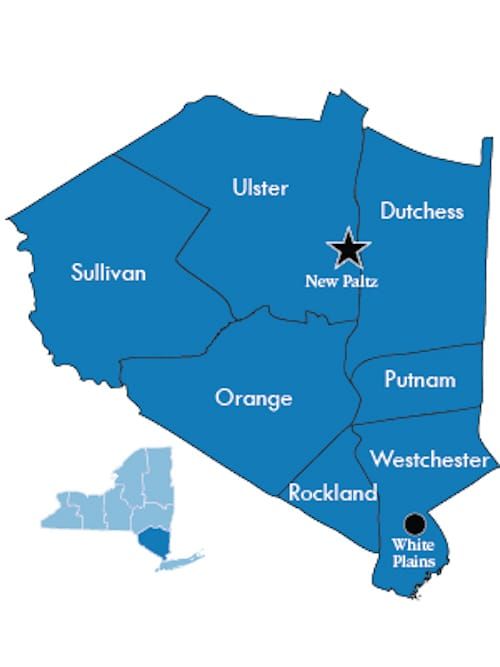
IRVINE, CA—A recently released study has found that pockets of the Northeast, including three counties in the Hudson Valley region, were most at risk to the impacts of the coronavirus heading into 2021.
The report released on Jan. 21 by property database curator ATTOM Data Solutions found that 18 of the 50 U.S. counties most at-risk in the fourth quarter of 2020 were in metropolitan statistical areas around New York City, Philadelphia and Chicago.
They included eight counties in or near the New York City suburbs including Dutchess, Orange and Rockland counties in New York; Bergen, Essex, Ocean, Passaic and Sussex counties in New Jersey, along with four counties around Philadelphia, PA (Burlington, Camden and Gloucester counties in New Jersey plus Delaware County, PA).
The other six were in the Chicago suburbs (DuPage, Kane, Kendall, Lake, McHenry and Will counties). The New York and Chicago metropolitan areas saw increases from the third quarter of 2020 in the numbers of counties on the top 50 list.
While seven of Connecticut’s eight counties made the top 50 list in the third quarter of 2020, just two did in the fourth quarter—Litchfield and Windham counties. The number of counties on the list in the Baltimore metro area also fell notably in the fourth quarter, from four to one (Carroll County) and dropped from four to two in the Washington, D.C, area (Charles County, MD, and Prince George’s County, MD).
Nationwide, the study revealed that New Jersey, Illinois, California, Louisiana, New York, Florida and Maryland had 40 of the 50 counties most vulnerable to the economic impact of the pandemic in the fourth quarter of 2020.
Fourth-quarter trends generally continued those found in the third quarter of 2020, but with different concentrations around several major metropolitan areas. The number of counties among the top 50 most at-risk was up from five to eight in the New York City area and from three to six in the Chicago area, but down from four to two in the Washington, D.C., region and from four to one in the Baltimore, MD area.
Markets are considered more or less at risk based on the percentage of homes facing possible foreclosure, the portion with mortgage balances that exceed the estimated property value and the percentage of average local wages required to pay for major home ownership expenses.
“Areas of the U.S. most at risk from damage connected to the Coronavirus pandemic spread out somewhat in the fourth quarter of 2020. But they still fell mainly along the East Coast, with significant pockets in certain areas, while other parts of the country seem to be less vulnerable,” said Todd Teta, chief product officer with ATTOM Data Solutions.
He continued, “This report is not a sign that any area actually took a fall in the fourth quarter. It’s more a gauge of areas that may be more vulnerable if the market falters. In the coming months, much will depend on whether the country can halt the pandemic. We will continue to keep a close watch on home sales and prices to see how everything shakes out in 2021 and if changes hit different regions in different ways.”
Major home ownership costs (mortgage payments, property taxes and insurance) consumed more than 30% of average local wages in 36 of the 50 counties that were most vulnerable to market problems connected to the virus pandemic in the fourth quarter of 2020. The highest percentages in those counties were in Rockland County (65% of average wages needed for major ownership costs); El Dorado County, CA, (outside Sacramento) (57.8%); Bergen County, NJ (outside New York City) (55.3%); Delaware County, PA (outside Philadelphia) (52%) and Beaufort County (Hilton Head), SC (51.7%). Nationwide, major expenses on the median-priced home typically consumed 29.6% of average wages.
At least 15% of mortgages were underwater in the third quarter of 2020 (the latest data available on owners owing more than their properties are worth) in 33 of the 50 most at-risk counties. Nationwide, 12.3% of mortgages fell into that category. Those with the highest underwater rates in those counties were Lowndes County (Valdosta), GA (36.8% of mortgages underwater); Hardin County, KY (outside Louisville) (32.8%); Cumberland County (Vineland), NJ (30.8%); Caddo Parish (Shreveport), LA (28.6%) and Atlantic County (Atlantic City), NJ (27.8%), the report stated.
More than one in 2,500 residential properties faced a foreclosure action in the third quarter of 2020 in 29 of the 50 most at-risk counties. Nationwide, one in 5,048 homes were in that position. (Foreclosure actions dropped about 80% last year amid a federal moratorium on banks taking back properties from homeowners behind on their mortgages during the virus pandemic.) Those with the highest rates in those counties were Hardin County, KY (outside Louisville) (one in 1,032 residential properties facing possible foreclosure); Onslow County (Jacksonville), NC (one in 1,090); Caddo Parish (Shreveport), LA (one in 1,361); Saint Clair County, IL (outside St. Louis, MO) (one in 1,409) and Livingston Parish, LA (outside Baton Rouge) (one in 1,562).
Eighteen of the 50 counties least vulnerable to pandemic-related problems from among the 499 included in the fourth-quarter report were in Colorado, Massachusetts, Minnesota and Texas. They were concentrated in the Denver, Boston, Minneapolis, Houston and Dallas metro areas. The largest of the 50 least at-risk counties were Harris County (Houston), TX; King County (Seattle), WA; Clark County (Las Vegas), NV; Tarrant County (Fort Worth), TX and Middlesex County, MA (outside Boston).