Is Homeownership Still the American Dream? What It Means for Today’s REALTORS®

For decades, homeownership has been synonymous with the American Dream. It has represented stability, wealth-building, and a sense of personal achievement. But in today’s market, many buyers and even industry professionals are asking a more complicated question: is that dream still attainable?
A recent segment from the National Association of REALTORS featuring Chief Economist Lawrence Yun explores this very issue and offers important perspective for real estate professionals navigating today’s environment. View article HERE.
The Dream Has Not Disappeared. The Path Has Changed
According to Yun, the desire for homeownership remains strong. Americans still view owning a home as a key life goal and a central part of financial security.
What has changed is not the aspiration, but the accessibility.
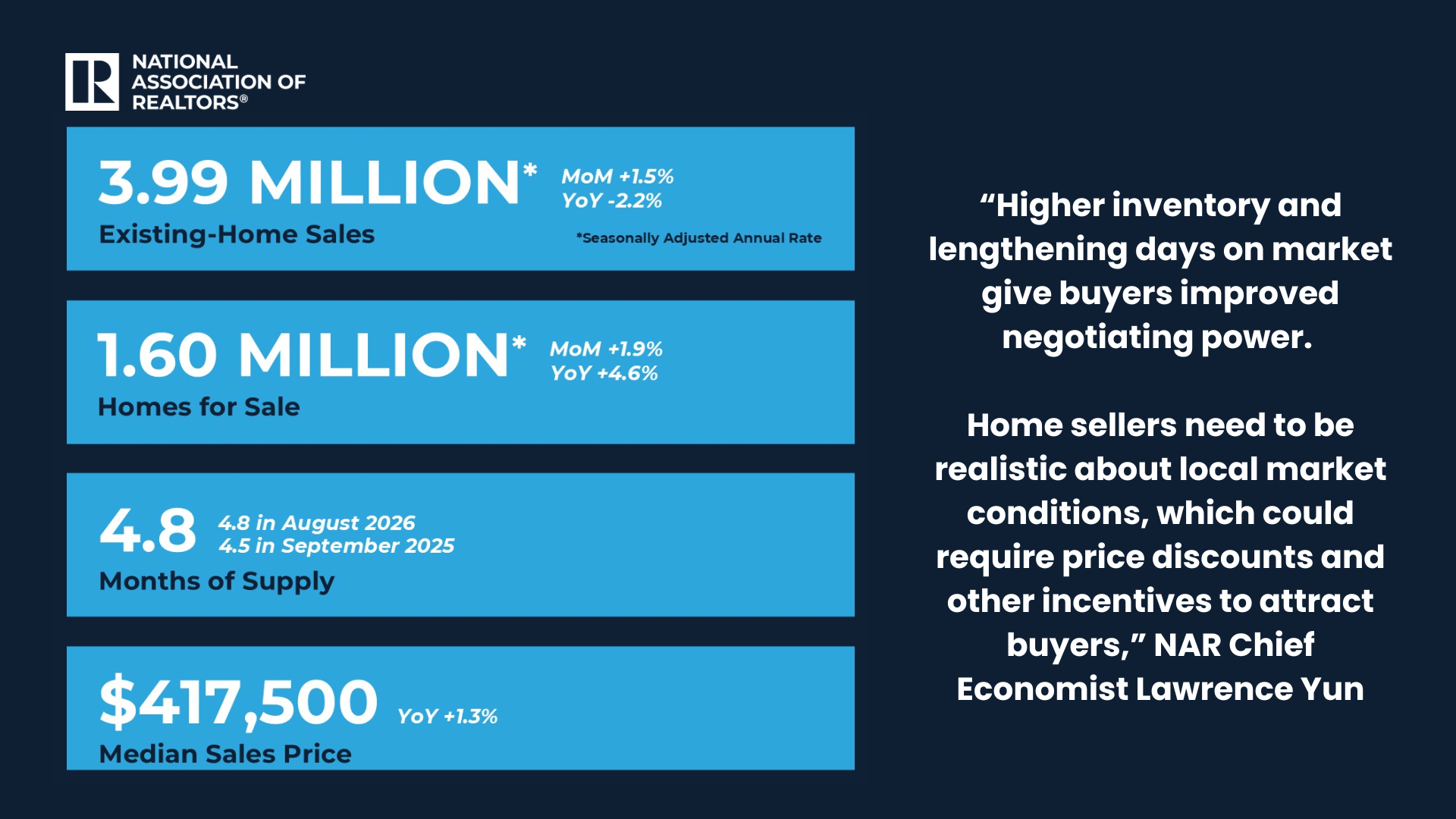
High home prices, limited inventory, and elevated mortgage rates have made it more difficult, particularly for first-time buyers, to enter the market. These conditions have created frustration and, in some cases, skepticism about whether ownership is achievable in the near term.
Still, demand has not disappeared. It has been delayed.
A Market Defined by Constraints, Not Lack of Interest
Today’s housing landscape is not suffering from a lack of buyers. It is constrained by supply and affordability.
Recent data reinforces this shift:
- First-time homebuyers have dropped to historically low levels due to affordability challenges
- Many younger buyers are delaying purchases as they manage debt and rising living costs
- Cash buyers and equity-rich homeowners are dominating transactions
For HGAR members, this is a critical distinction. The challenge is not convincing consumers that homeownership matters. It is helping them navigate a market that makes it harder to achieve.
The Role of REALTORS® Has Never Been More Important
In this environment, the value of a REALTOR® becomes more pronounced.
Clients are not just looking for listings. They are looking for:
- Guidance on timing the market
- Creative strategies to compete and win offers
- Education on financing options and long-term equity building
- Confidence that homeownership is still within reach
As Yun emphasizes, housing demand is fundamentally tied to demographics and life stages. People continue to form households, grow families, and seek stability.
That underlying demand is not going away.
Reframing the American Dream for Today’s Buyers
For many consumers, the concept of the American Dream is evolving.
It may no longer mean:
- A large suburban home as a first purchase
Instead, it may look like:
- A condo or co-op as a first step
- A longer timeline to ownership
- A focus on financial stability rather than immediate scale
This shift presents an opportunity for HGAR members to reposition the conversation.
Rather than focusing solely on the traditional vision of homeownership, agents can help clients understand the pathway to ownership, including incremental steps that build equity over time.
What This Means for the Hudson Gateway Region
In markets like Westchester, the Bronx, Rockland, Orange, and Putnam, these national trends are playing out in real time.
- Limited inventory continues to drive competition
- Affordability pressures are pushing buyers into new markets and property types
- First-time buyers are increasingly looking for guidance and realistic entry points
For HGAR members, this reinforces the need to:
- Educate clients early and often
- Set realistic expectations while maintaining optimism
- Position homeownership as a long-term strategy, not a single transaction
The Bottom Line
Homeownership is still very much part of the American Dream.
But it is no longer a one-size-fits-all journey.
As the market evolves, so must the way we communicate its value. The opportunity for REALTORS® is to bridge the gap between aspiration and reality, helping clients see not just where the market is today, but how they can successfully move through it.
Because while the dream may feel more complex, it is still very much alive.