Report Warns of Severe Economic Consequences of Continued Housing Shortfall in Westchester County
WHITE PLAINS—A newly released report by the Westchester County Association and the Regional Plan Association estimates that the county currently has a large housing shortfall and faces severe economic fallout if it does not address the issue in future years in the form of thousands of jobs and tens of billions of dollars in gross revenues lost.
The findings of the “Building Growth: The Economic Impact of Addressing Westchester’s Housing Crisis” were originally released at the Westchester County Association’s Real Estate Summit held on May 21 at the Westchester County Club in Rye.
The report warns that if Westchester fails to address its growing housing shortfall, the county could lose between 8,400 to 12,000 jobs annually and $533 million to $742 million in annual earnings. The price tag would total between $32 billion and approximately $57 billion in Gross Domestic Product by 2040.
Westchester County Executive Ken Jenkins said, “Westchester County understands that there is a real, critical need for more housing opportunities if we want to move in tandem with the development that has been occurring across the economic sector. Since our administration first took office, we have made it abundantly clear that housing—and the availability of all kinds of housing options—would remain a top priority. Our recent investments in housing align with our long-term strategy to address housing needs, and provide stability for families who are looking to build their futures here. I want to thank our partners at the Westchester County Association and the Regional Plan Association for compiling this important study, that clearly demonstrates the conversations that must be had to continue moving Westchester forward.”
Michael N. Romita, president and CEO of the Westchester County Association, said, “This report confirms what we’ve been sounding the alarm about: housing isn’t just a social issue—it’s an economic one. With support from our county government over the past few years, Westchester has made great progress on housing over the past several years. If we want Westchester to remain competitive, if we want to support our workforce and fuel the incredible momentum we’re seeing in sectors like healthcare, we must prioritize smart, sustainable housing development.”
Romita noted that if the county and its localities achieve the governor’s Pro-Housing goal of increasing their housing stock by 1% each year, the shortfall, which is now at 21,000, would not be as drastic. Westchester County in November 2019, released its Housing Needs Assessment report that calculated a shortfall of new affordable housing units of 11,703.
Romita said the report clearly shows the economic benefits of housing development that would make Westchester a desirable location to do business. The lack of progress in filling the housing affordability gap would have the reverse effect on the county’s economy and business climate, he added.
“If the county continues on its current trajectory, its housing shortfall could grow to between 44,000 to 77,000 units by 2040,” the report stated, “A pro-housing policy of 1% annual growth compounded year-over-year between now and 2040 would substantially reduce this housing shortfall. But it would still leave a gap of approximately 10,400 units, even when assuming a more modest population and job growth scenario.”
Conversely, if the county fully addresses its housing needs going forward, the economic benefits would be substantial—Westchester County could create up to $82 billion in economic activity, 17,300 annual jobs, and $1.1 billion in earnings power, the report stated.
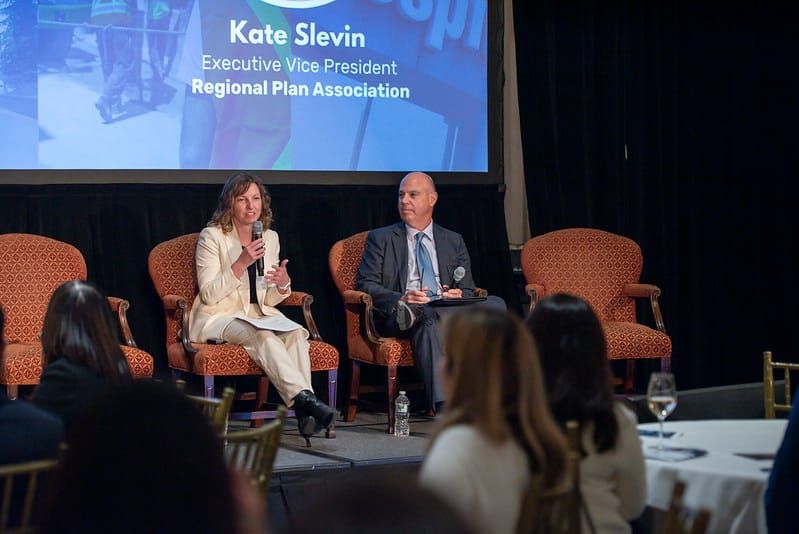
The research was authored by RPA’s Director of Land Use Marcel Negret, Vice President of Housing and Neighborhood Planning Moses Gates and Research Intern Husen Kharodawala, and was presented at the WCA event by RPA’s Executive Vice President Kate Slevin.
“RPA is proud to work with WCA on this new report that defines what the county stands to gain by addressing the housing crisis,” said Slevin. “Our research shows that progress has been made to create more homes in walkable, transit-oriented neighborhoods, but more must be done to address the County’s historically low vacancy rate.”
According to the report, over the last 30 years, there have been approximately 61,000 residential units, 34,000 during the first development cycle (1990-2009) and 27,000 during the second (2010-2024) in Westchester County.
Since 2010, there has been a significant shift towards higher-density housing and Transit Oriented Development. Moreover, the share of multifamily buildings (with five units or more) has grown substantially, constituting 78% of the total stock permitted between 2010 and 2024, compared to 29% during the pre-recession cycle.
However, despite this surge in building activity, it has not kept up with demand. The county’s rental housing vacancy rate has fallen to a historic low of 1.9%. Meanwhile, over the past decade, average rents in the county rose 46% from $2,051 in 2015 to $2,990 in 2025.
The RPA stated in the report: “Continued development of housing in Westchester is an investment in a robust economy, a local and productive talent pool attractive to businesses, and vibrant communities that enjoy a strengthening tax base. Housing initiatives will contribute to the county’s long-term prosperity. On the other hand, inaction will lead to significantly higher costs than those associated with implementing essential investments and policy modifications that support smart housing growth.”
The Real Estate Summit also featured a panel of industry leaders driving Westchester’s healthcare real estate expansion that was moderated by Patricia Simone, President of Simone Development Companies. The panel included: Joshua Ratner, EVP and Chief Strategy Officer at WMCHealth; Vaughn Ratchford, SVP and Chief Real Estate Officer at New York Blood Center Enterprises; Joshua Strugatz, Chief Campus Transformation Officer at White Plains Hospital; and Joseph A. Ienuso, Group SVP of Facilities and Real Estate at New York-Presbyterian. The panel explored how healthcare and life sciences institutions are investing in major construction projects—and how the region’s housing ecosystem must evolve to support the healthcare sector’s continued growth.
To access the full RPA report, go to: https://rpa.org/work/reports/building-growth