Mount Pleasant Reviews Zoning Variances for $1.9 Billion Water Infrastructure Project
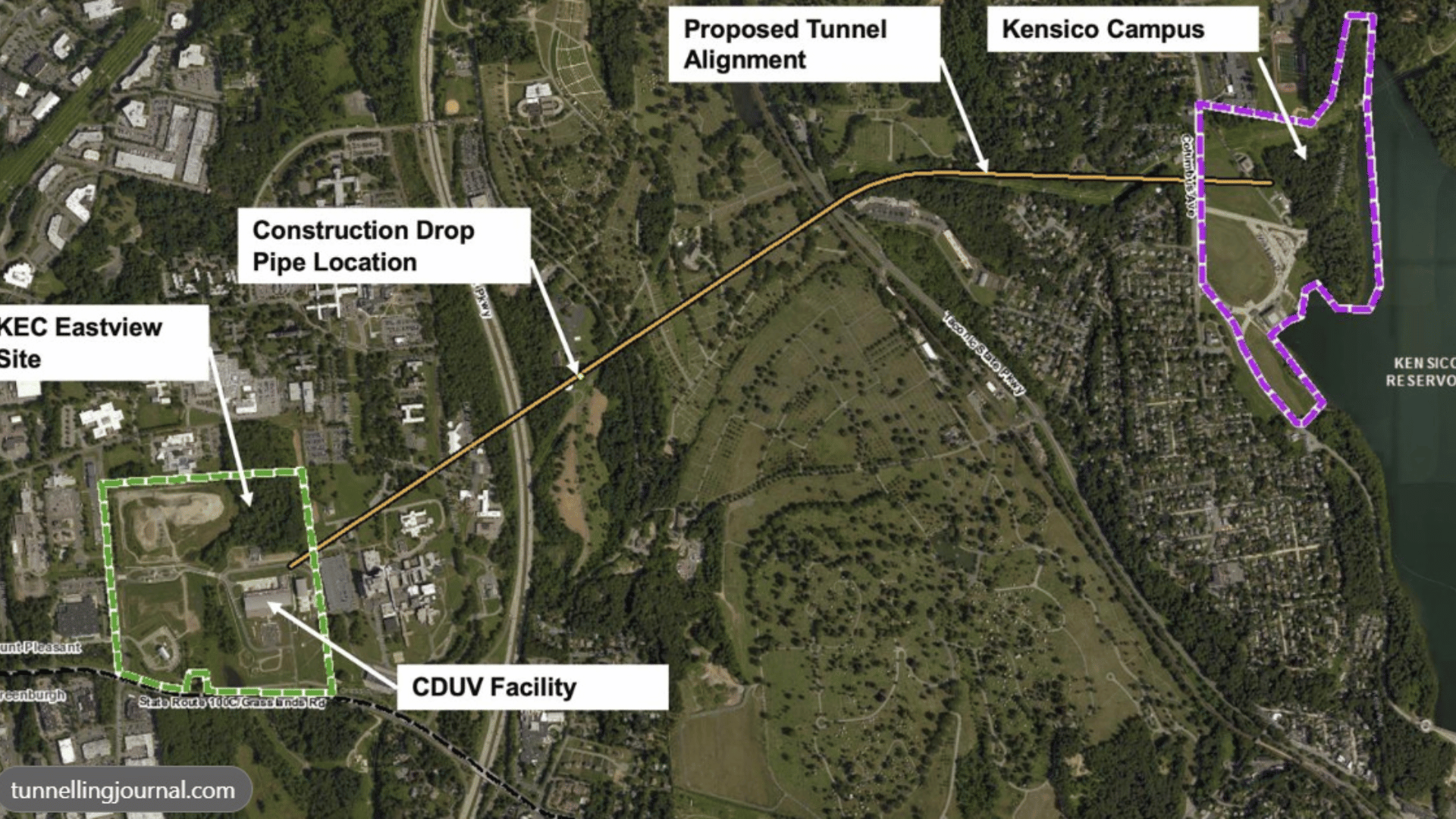
The Town of Mount Pleasant is reviewing zoning variance requests from the New York City Department of Environmental Protection (DEP) for construction associated with a $1.9 billion water infrastructure project connecting the Kensico Reservoir to the Catskill/Delaware Ultraviolet Light Disinfection Facility in Eastview.
The Kensico-Eastview Connection project includes construction of an approximately two-mile-long, 27-foot-diameter deep rock tunnel designed to transport drinking water between the reservoir and the treatment facility.
The Mount Pleasant Zoning Board of Appeals has requested additional information from DEP before determining whether to approve several variances needed for construction at the agency's 1 Westlake Drive campus near Kensico Reservoir. The board expects to review additional project details at its December 10 meeting.
Among the proposed improvements is a 70-foot-tall screen chamber building that would house equipment to remove debris from water before it enters the new tunnel. DEP is also seeking approval for a 19-foot retaining wall and an 8.5-foot perimeter security fence. Current zoning regulations limit building heights to 35 feet, retaining walls to six feet and fences to six feet.
Additional construction at the site would include a new electrical building, a DEP Police security booth, security enhancements and modifications to the existing Catskill Upper Effluent Chamber, which regulates water entering the distribution system from Kensico Reservoir.
DEP has indicated that landscaping and screening measures would be incorporated to reduce the visual impact of the new facilities.
The project is part of ongoing investments in the regional water supply system serving nearly 10 million residents. More than 90% of New York City's drinking water originates in the Catskill and Delaware watersheds, with water transported through aqueducts to Kensico Reservoir before treatment and distribution.
The Mount Pleasant zoning review represents another step in advancing the major infrastructure project, which will support the long-term operation and reliability of the region's drinking water system.