Average Wall Street Bonus Rose 6% to $246,900 in 2025
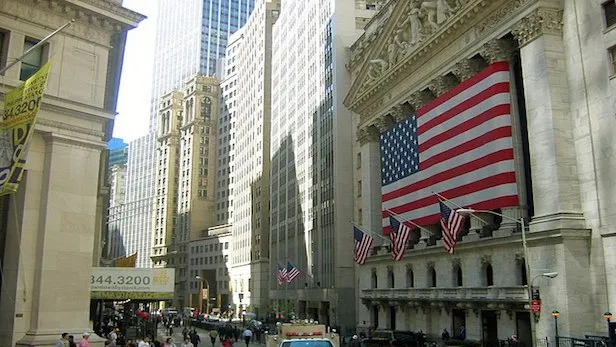
ALBANY—Wall Street’s securities industry bonus pool reached a record $49.2 billion in 2025, up 9% from the previous year, while the average bonus rose 6% to $246,900, according to New York State Comptroller Thomas P. DiNapoli’s annual estimate released today. The increases reflect a rise of more than 30% in Wall Street’s profits, which totaled $65.1 billion in 2025.
“Wall Street saw strong performance for much of last year, despite all of the ongoing domestic and international upheavals,” DiNapoli said. “When Wall Street does well, it’s good for our state and city budgets, which are reliant on the industry’s significant tax contributions. However, we are seeing slower job growth, and geopolitical conflicts have global repercussions that pose extraordinary risks for the short- and long-term outlook on the financial sector and for broader economic markets.”
In 2025, strong trading activity, underwriting, and fees charged to manage client accounts drove profits and bonuses higher. When adjusted for inflation, however, the bonus pool peaked in 2006 at $53.7 billion.
Securities industry employment edged down slightly to 198,200 in 2025 from a 30-year high of 201,500 in 2024, according to preliminary data. However, the Office of the State Comptroller anticipates employment will be revised upward when annual data adjustments are made, showing modest growth, which is consistent with adjustments in recent years.
The city’s share of securities industry jobs nationally was about 17.9% in 2024, down from roughly one-third in 1990, but still more than any other state. New York City remains the nation’s financial capital, although job growth has been faster in some other parts of the country. DiNapoli estimates 1 in 13 jobs in the city is either directly or indirectly associated with the securities industry.
The average annual salary in New York City’s securities industry rose 7.3% to $505,677 in 2024, including bonuses. It is the industry’s second-highest salary on record, and nearly five times the average salary in the rest of the city’s private sector. Bonuses accounted for about 42% of securities industry wages. Wall Street was responsible for 20.2% of all economic activity in the city in 2024.
It accounted for 19.4% of the state’s tax collections in State Fiscal Year (SFY) 2024-25 and 8.4% of city tax revenue in City Fiscal Year (FY) 2025. DiNapoli estimates the 2025 bonuses should generate $199 million more in state income tax revenue and $91 million more for the city when compared to the previous year.
Gov. Kathy Hochul’s proposed budget assumed bonuses in the state’s broader finance and insurance sector would increase by 25.9% in SFY 2025-26, while the city’s FY 2026 financial plan assumed an increase of 15.1% in the city’s securities industry bonuses. Based on DiNapoli’s estimate, tax revenue from the bonuses may fall short of expectations for the current fiscal year.