New Study Concludes 2019 Rent Laws Having Tangible And Unintended Consequences on County Buildings
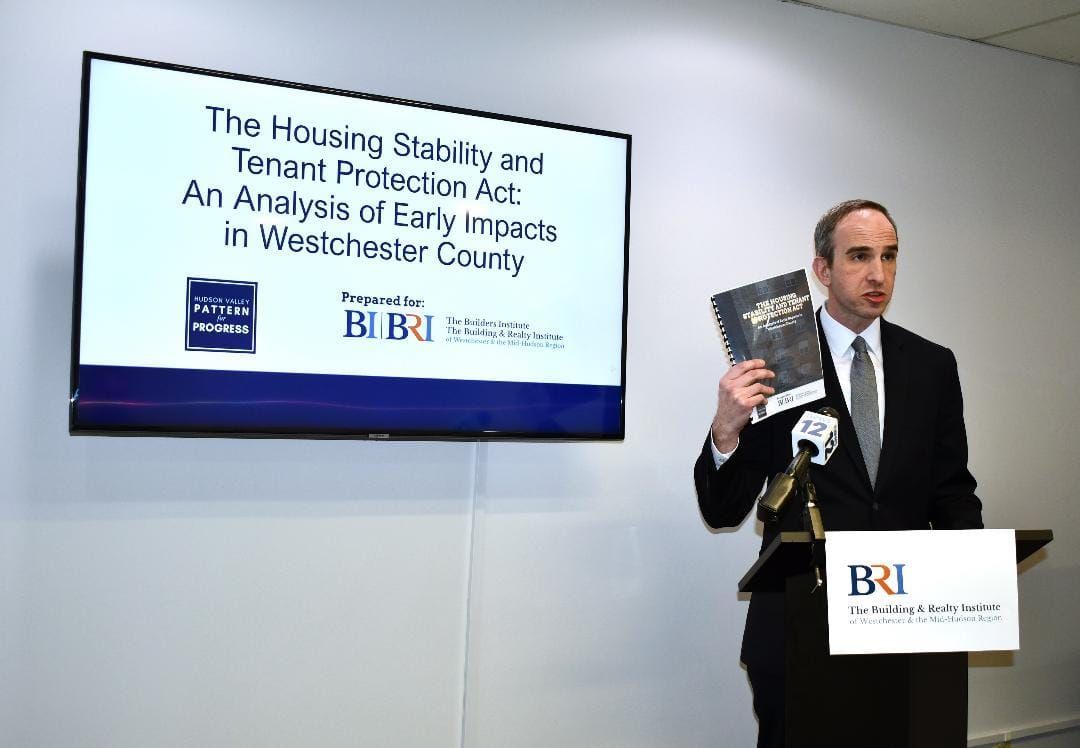
ARMONK— The Building and Realty Institute released a new study on Feb. 16 entitled: The Housing Stability and Tenant Protection Act: An Analysis of Early Impacts in Westchester County” that revealed both tangible fiscal impacts, as well as unintended consequences of the Housing Stability and Tenant Protection Act (HSTPA) enacted into law in 2019 on the real estate market within Westchester County.
Part of the HSTPA involved changing a number of programs whereby property owners with rent-stabilized units could increase rents on new or renewing tenants. A previous vacancy bonus, which allowed landlords to add a fixed percentage to the rent when there is a change in tenant to help pay for renovations, had been eliminated entirely. Programs related to Major Capital Improvements, such as replacing a boiler or renovating an outdated elevator or Individual Apartment Improvements like repairing major wear and tear or replacing outdated appliances or fixtures were both greatly reduced in terms of the money that could be recouped and the period of time that such reimbursements needed to be spread out over, the report stated.
Key findings of the report include:
• There has been a measurable decrease in the number of MCI applications since HSTPA became law.
• There has been a decrease in the annual dollar amount on repairs and maintenance in rent-stabilized apartments.
• Allowable rent increases in Westchester for rent-stabilized buildings have not kept up with the rate of inflation.
• Buildings with low-rent units may have a more difficult time recouping the costs of major capital improvements.

Adam Bosch, CEO of Hudson Valley Pattern for Progress
“The data collected for this study found a decrease in the number of applications for the maintenance and upkeep of buildings that are subject to HSTPA in Westchester County,” Pattern for Progress CEO Adam Bosch said. “These data need to be collected and tracked in future years to understand whether that decrease in applications is an effect of the law, an effect of the COVID-19 pandemic, or a combination of both.”
Bosch added, “Our study will allow organizations like the BRI to track those changes over time to make fact-based conclusions about HSTPA and its impacts on renters and building owners. To help in that effort, the state Division of Homes and Community Renewal should post MCI applications, approvals and other data in a public portal to improve tracking and accountability for all.”
“Since Albany revised the rent-stabilization laws, we’ve heard from numerous property owners that the sweeping changes to the Individual Apartment Improvements and Major Capital Improvement programs had made it financially infeasible to do much more than patch over renovation and repair issues,” BRI CEO Tim Foley said.
He later noted, “We believe their report gives both policymakers and advocates a lot to consider on how we reach our shared goals of providing housing that is affordable, safe, stable, and dignified.”
To conduct the study objectively, Pattern employed a combination of qualitative and quantitative research methods. In addition to interviews with various stakeholders, including building owners, housing advocates, housing lenders, and others, Pattern captured the potential quantitative impacts of HSTPA through an analysis of historic WRGB rent increases compared to the rate of inflation, an evaluation of changes to the IAI and MCI programs, an analysis of applications and orders under the MCI program before and after the legislation was passed, and a review of annual income and expense reports.
The BRI noted that primary limitations of the study were the short amount of time that has passed since HSTPA was adopted in 2019, the concurrent timing of THE COVID-19 pandemic with the passage of HSTPA which affected tenants, building owners, and the economy at large, and, in some cases, the quality of data available.
The Building and Realty Institute of Westchester and the Mid-Hudson Region, which is based in Armonk, has more than 1,800 members in 14 counties of New York State, including home builders, commercial builders, renovators, property managing agents, co-op and condo boards, and owners of multifamily apartment buildings in many communities, as well as suppliers and service providers with a special focus on real estate.